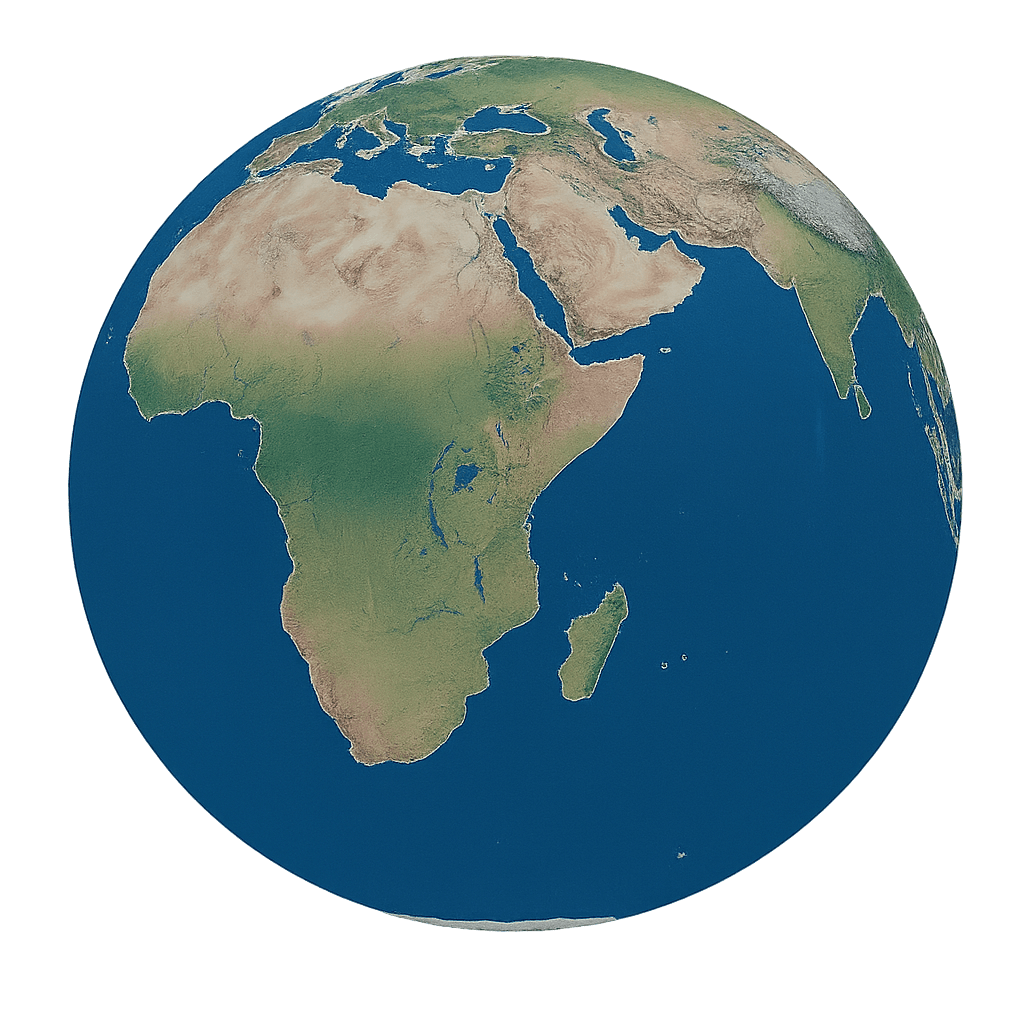

Transportation Infrastructure May Add 200 Billion Tons of Excess Weight to Civilization
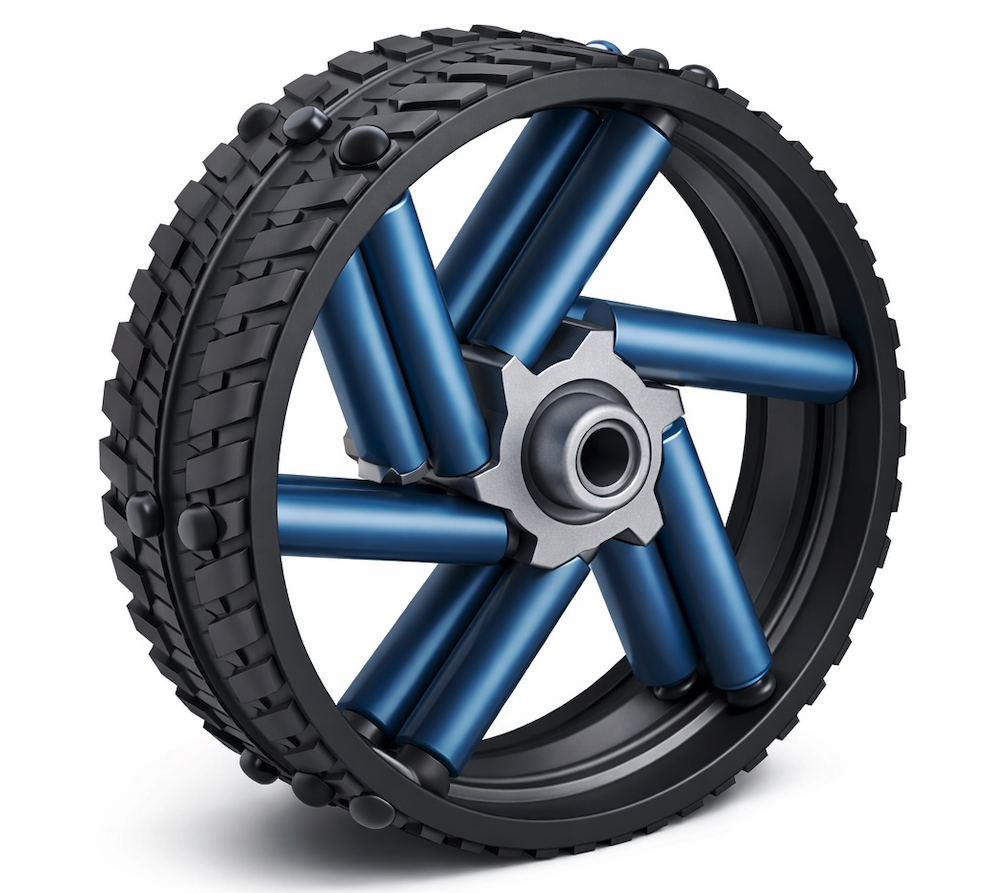
SurfacePlan Concept Wheel from CAD
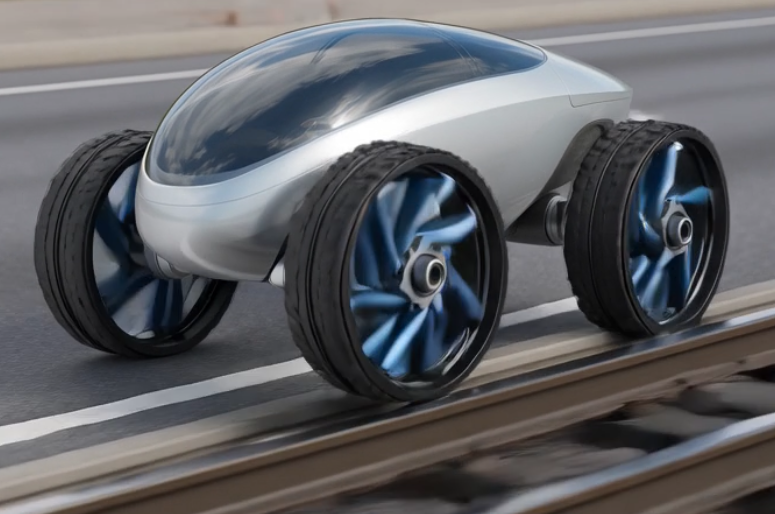
SurfacePlan Concept On Rail/On Road Pod Vehicle

Surface Plan PinArt
A Moonshot Wheel Concept Challenges the Assumptions Behind Civilization's Heaviest Structures
The SurfacePlan wheel is a moonshot, if successful, it could make it could help make civilization materially lighter”
DENVER, MN, UNITED STATES, February 12, 2026 /EINPresswire.com/ -- Inventor David Henson was recently asked a familiar question by a Fortune 500 industrial company and potential vendor: “What is the potential market size for your SurfacePlan wheel invention?”— David Henson (Inventor)
It’s a fair question of the kind large engineering firms always ask first. But the answer turned out to be far less conventional than expected.
The SurfacePlan wheel fundamentally changes how load and power are transferred to the ground. Rather than relying on heavy engines, drivetrains, and massive suspension systems to inefficiently redirect forces through traditional wheels, SurfacePlan distributes force dynamically at the surface interface itself, whether on road or rail.
SurfacePlan is a Moonshot technology: still conceptual and technically demanding but aimed at a payoff measured at civilization scale. If successful, the implication is not incremental efficiency, but vehicles that become dramatically lighter. Because much of today’s vehicle mass exists to redirect, buffer, and dissipate energy through complex mechanical systems before it reaches the tire-ground interface, rather than directing that energy efficiently at the interface itself.
That realization led Henson to a more fundamental question: how much of civilization exists just to carry weight?
What followed was an unexpected look at the approximate physical mass of the transportation system itself - not metaphorically, but in tons.
Rolling Vehicles: The Obvious Starting Point
Globally, there are roughly 1.5 billion passenger cars, with average empty weights of approximately 1.5 to 2.0 tons each. In addition, there are approximately 100 million trucks and buses, whose empty vehicle weights typically range from 6 to 20 tons, depending on class. The global rail fleet includes roughly 10 million rail cars and locomotives, with empty weights commonly between 30 and 80 tons per vehicle.
Even conservatively, this places the rolling vehicle mass of civilization at approximately 4 to 5 billion tons.
That number matters because a large fraction of this mass is structural rather than functional. Modern vehicles are heavy not because passengers or cargo demand it, but because engines and drivetrains are massive, suspension systems must absorb and control the inertia of heavy vehicle mass, frames must survive extreme point loads, and braking systems must safely dissipate large forces.
The SurfacePlan direct-thrust wheel targets this entire stack at once. By changing how load is transferred to the ground, it reduces the need for heavy drivetrains, oversized suspension systems, and reinforced frames designed to survive slip and impact. Preliminary modeling suggests that vehicle weight reductions on the order of 60-80 percent are possible.
Four to five billion tons of vehicle mass is enormous, but it turns out to be the small number.
Roads: The Mass Few People Think About
Roads are rarely thought of as heavy, yet they are among the heaviest structures humans build. They are heavy for one reason: vehicles are heavy.
A modern road is not just asphalt. It is a layered structural system engineered to survive axle loads, braking forces, dynamic impact, and fatigue over millions of cycles. Globally, there are roughly 40 million kilometers of paved roads, with typical structural thicknesses between 0.3 and 0.6 meters, and material densities around 2.3 to 2.5 tons per cubic meter.
Even conservative estimates place the total mass of global road infrastructure between 100 and 200 billion tons.
This matters for SurfacePlan because road thickness, reinforcement, and foundation depth are direct functions of vehicle weight. If effective vehicle weight drops dramatically, pavement layers shrink, base courses thin, subgrade requirements relax, and resurfacing cycles extend.
It is important to distinguish between payload mass, which SurfacePlan does not change, and vehicle structural mass, which it targets directly. Roads and bridges must still support people and goods. However, empty vehicle mass is carried on every mile traveled, regardless of load, and drives a significant share of energy use, braking forces, dynamic impact, and long-term infrastructure fatigue. Reducing that permanent mass lowers average and peak system loads even when payloads remain unchanged.
In configurations that enable autonomy, particularly in ultra-light, on/off-rail systems, reductions in driver mass, cab structure, and safety overhead could further amplify these effects.
Reducing vehicle weight does not just make vehicles lighter. It collapses the mass of the road system itself.
Bridges: Where Weight Scales Nonlinearly
Bridges do not scale linearly with vehicle weight. A bridge designed for 10-ton vehicles is not twice as heavy as one designed for 5-ton vehicles. Once dynamic loading, fatigue, redundancy, and safety factors are included, it is many times heavier.
Worldwide, millions of bridges constructed from steel and reinforced concrete sit on deep foundations and massive superstructures. A reasonable estimate places their combined mass between 20 and 40 billion tons.
This mass exists primarily to survive heavy moving loads and peak dynamic forces. Because bridge mass scales nonlinearly with load, even modest reductions in vehicle structural weight can produce outsized reductions in required bridge mass and cost.
SurfacePlan targets the assumptions that made these structures massive in the first place.
Rail Infrastructure: Efficiency With A Hidden Mass Bill
Rail is often described as efficient, and per ton-mile, it is. But that efficiency rests on enormous supporting mass.
Across roughly 1.3 million kilometers of global rail network, steel rails, sleepers, ballast, embankments, and prepared subgrade together represent a conservative mass estimate of 15 to 25 billion tons.
This mass exists because rail vehicles are heavy, and loads are highly concentrated. If rolling stock weight and dynamic load are reduced, rail sections can be lighter, ballast depth can shrink, and embankments can be reduced.
One potential application of the SurfacePlan wheel is ultra-light rail, where vehicles operate on rail when available and transition seamlessly to road for efficient portal-to-portal transportation.
Parking, Depots, And The Forgotten Weight
Cities quietly devote enormous material to parking alone. Parking garages, depots, yards, and reinforced slabs are engineered for multi-ton vehicles, dynamic loads, impact resistance, and fire safety.
A conservative estimate places the global mass of parking-related infrastructure between 30 and 60 billion tons.
If vehicles weigh a fraction of what they do today, structural slabs thin, columns shrink, and entire garages change form. SurfacePlan reduces not just vehicle mass, but the structural assumptions embedded in cities themselves.
The Machines That Build And Rebuild The System
There is another layer rarely counted: the machines required to build and maintain heavy infrastructure.
Roads, bridges, and rails are constructed and constantly repaired using extremely heavy equipment, including excavators, bulldozers, pavers, rollers, and cranes. These machines are heavy because they must exert enormous ground forces and survive working with heavy infrastructure.
Globally, millions of such machines exist, representing tens of millions of tons of rolling mass and more importantly, a continuous material and energy throughput tied to maintenance cycles. Heavy vehicles require heavy infrastructure. Heavy infrastructure requires heavy machines. Heavy machines consume enormous energy and material.
This is a closed feedback loop. Reducing vehicle weight lessens the loop everywhere.
Putting The Numbers Together
When first-order categories are added together, vehicles, roads, bridges, rail infrastructure, and parking, the total mass tied to supporting heavy vehicle weights falls between 170 and 330 billion tons.
This mass exists not because transportation demands it, but because vehicle weight does.
Why This Reframes The “Market Size” Question
So when a Fortune 500 company asks, “What’s the market size for your wheel?” the honest answer may be simple: it is proportional to how much of civilization exists just to carry weight.
SurfacePlan does not simply improve vehicles. It challenges vehicle weight assumptions that propagate through roads, bridges, rails, parking, construction equipment, energy use, and emissions. Because structural mass scales nonlinearly with load, even partial success could have civilization-scale implications.
Engineering Review, Debate, And Next Steps
Since sharing the SurfacePlan concept more broadly, Henson says the response from the engineering community has been expectedly mixed.
Engineers with backgrounds in aerospace, rail, automotive, and industrial systems including some with extensive experience at major industrial and defense firms have provided detailed and encouraging feedback, noting that the underlying question of how load is transferred at the surface interface is both legitimate and under explored.
Others have been openly skeptical, challenging assumptions, highlighting technical risks, or dismissing the idea outright. Henson views this range of responses as expected and healthy for a Moonshot.
To move the concept toward validation, Henson is seeking early-stage funding and engineering collaboration to support simulation and prototyping. As part of that effort, he has launched a public interest poll on Wefunder ( https://wefunder.com/surfaceplan/join ) to gather interested investors. Early results indicate that many respondents view the SurfacePlan concept as worth pursuing.
Final Note
The original question was simple. The implications are not.
SurfacePlan does not promise a solution. It proposes a Moonshot, one that targets the physical assumptions embedded in modern transportation. If successful, even in narrow applications, it could help make civilization materially lighter.
And that question is large enough to justify an attempt to rethink how civilization meets the ground.
About SurfacePlan
SurfacePlan is an early-stage transportation technology concept focused on rethinking how load and power are transferred at the wheel–ground interface. The project explores whether directing force dynamically at the surface interface can reduce vehicle structural mass and the infrastructure required to support it.
About David Henson
David Henson is an independent inventor exploring new ways to transfer power at the wheel-ground interface, and how rethinking that interface could reduce vehicle mass and the infrastructure required to support it. His work spans vehicles, rail, and broader transportation systems.
More information: https://www.surfaceplan.com and https://wefunder.com/surfaceplan/join
David L Henson
Arrow Dot Press Ltd.
+1 612-636-2431
email us here
SurfacePlan Wheel Concept Video
Legal Disclaimer:
EIN Presswire provides this news content "as is" without warranty of any kind. We do not accept any responsibility or liability for the accuracy, content, images, videos, licenses, completeness, legality, or reliability of the information contained in this article. If you have any complaints or copyright issues related to this article, kindly contact the author above.
